The blood is elsewhere
Mehmet Çetin's blood — a near-certain DNA match — was found behind villa 1751, a spot no soldier set foot on that night and where no attack is recorded. Not at 1782.
Coming soon
KANLI YALAN
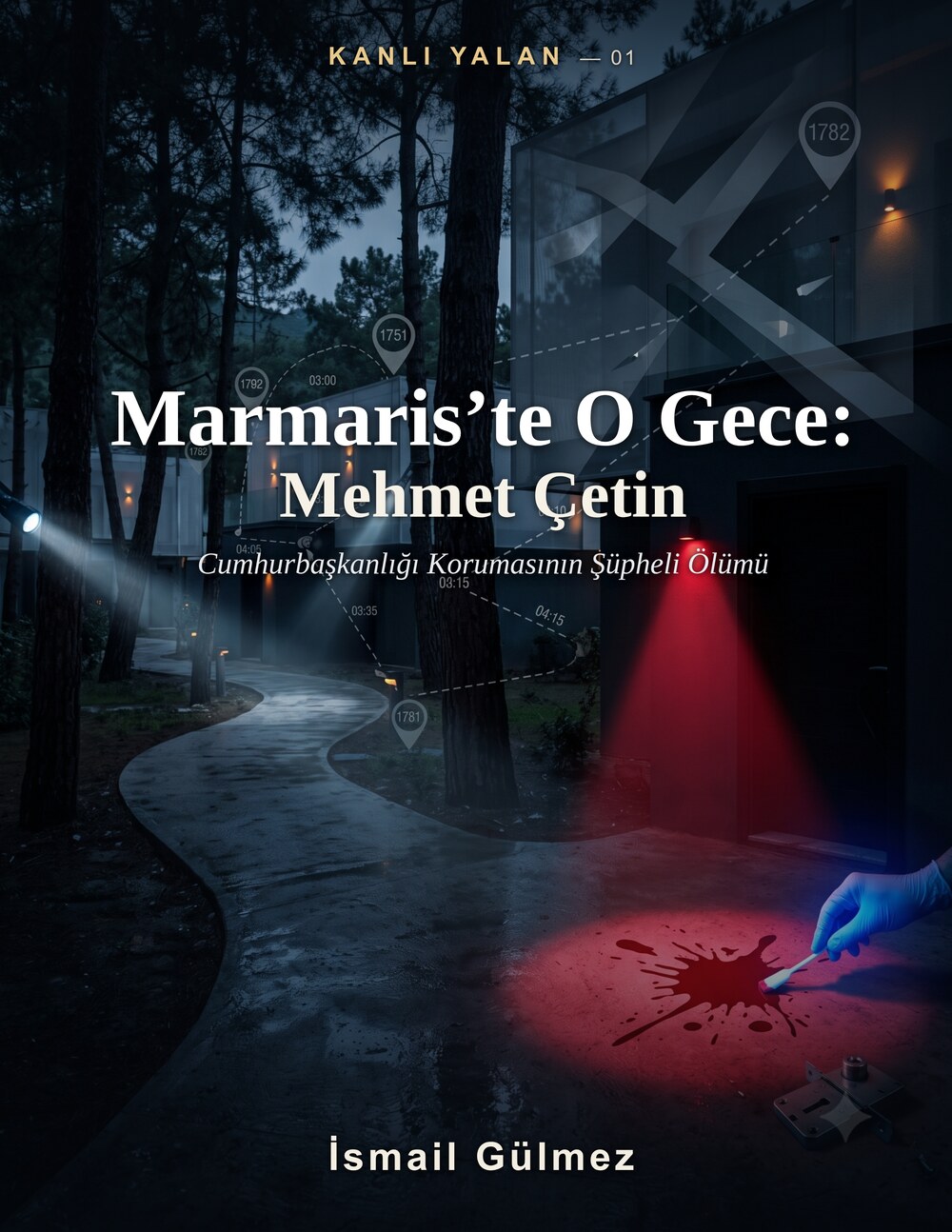
Marmaris'te O Gece: Mehmet Çetin
Launching 15 July 2026
Documentary series · Documents, not allegations
Kanlı Yalan — 01 · First Book
The Suspicious Death of a Presidential Bodyguard
On the night of 15–16 July 2016, in Marmaris, presidential guard officer Mehmet Çetin was killed. The official account says he was shot on the balcony of villa 1782 by soldiers who entered the hotel.
This book sets that account against the forensic and autopsy reports, the crime-scene records and the witness statements, line by line. The file's own documents point to a picture outside the official timeline.
What the file shows
The court accepted that Mehmet Çetin was shot in a firefight with soldiers at villa 1782. The physical and testimonial record in the file does not bear that out.
Mehmet Çetin's blood — a near-certain DNA match — was found behind villa 1751, a spot no soldier set foot on that night and where no attack is recorded. Not at 1782.
The autopsy's finding of a "gunshot wound to the left knee with a fragment from a soldier's rifle" is contradicted by the post-mortem examination photos and video. No entry wound is marked on the left knee.
The sole eyewitness, İrfan Paksoy, tied the killing to men in military dress who arrived by helicopter at 00:00–00:30. The convicted defendants reached Marmaris around 03:00. The court never heard Paksoy — or any bodyguard — in person.
The focus of this study is the official account of the death of Mehmet Çetin, the presidential guard officer who was killed in Marmaris on the night of 15–16 July 2016. The findings set out in the Reasoned Judgment of the Muğla 2nd High Criminal Court (Case 2016/277, Judgment 2017/253) are examined by setting them against the forensic documents in the case file and against open-source data.
The book is built on establishing the material truth through evidence. The findings recorded by the judicial authorities are woven into the text with objective, chronological discipline, and are at the same time made available for comparison with the relevant criminal-laboratory reports, autopsy data, crime-scene records and witness statements in the file.
An attentive reader will notice the tangle of contradictions within the file itself: the distance between the area where the firefight is assumed to have taken place and the physical spot the material findings point to; that the bullet entry diameters do not match the calibre of the weapons said to have been used; the shifts in the witnesses' accounts over time; and the way the official timeline occasionally breaks against itself.
This study is a concrete map of an unfinished forensic investigation, of material evidence left unexamined, and of legal gaps documented by the state's own official reports. It is a reference for those who look for the truth beyond dismantled radios, darkened lights and reports that contradict one another on the autopsy table.
The book will be published on Amazon in print and e-book editions. The link will be announced here on release.