Press
Press & Media
On the night of 15 July 2016 a presidential protection officer was killed; the court held the soldiers who arrived that night responsible without ever properly investigating. The material truth still waits to be uncovered…
For journalists: fast-facts, documents, assets and contact.
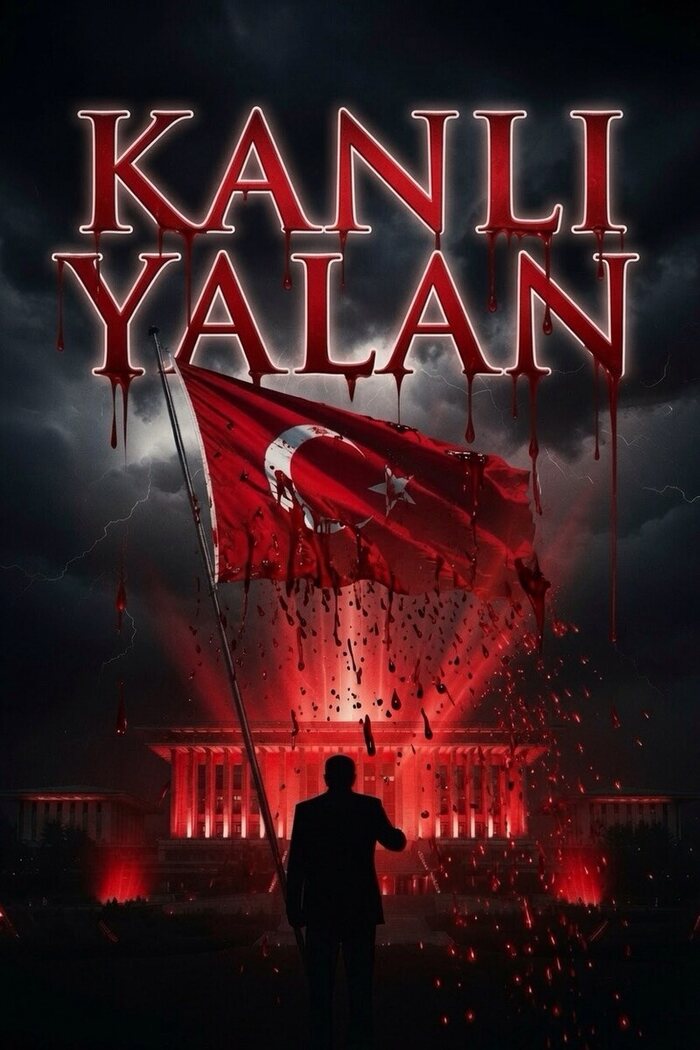
Kanlı Yalan (“Bloody Lies”) is an independent documentary book series that re-examines official accounts of deaths strictly through public forensic records. Each book grounds its findings in the court file, expert reports and autopsy records, and publishes facsimiles and online-archive links so readers can verify every document at its source.
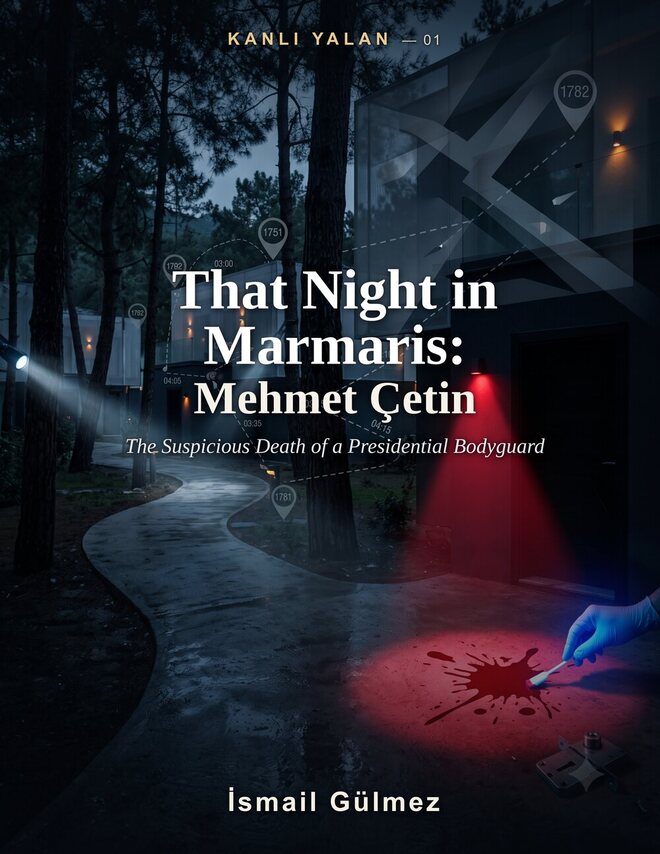
The series’ first book, “Marmaris’te O Gece: Mehmet Çetin” (“That Night in Marmaris”): the protection officer Mehmet Çetin was killed, the court chose to hold the soldiers who reached Marmaris that night responsible, and never properly investigated. Yet the criminal-laboratory, crime-scene and witness documents in the file paint an entirely different picture. This book aims to set out, document by document, the contradictions the court declined to examine.
Fast facts
- Book
- That Night in Marmaris: Mehmet Çetin
- Author
- İsmail Gülmez
- Series
- Kanlı Yalan — 01
- Language
- Turkish · English · French · German
- Format
- Print + e-book
- ISBN
- 9798189089640 (Amazon)
- Publication
- 15 July 2026
- Imprint
- Independently published
- Documents
- 43
- Archive infohash
- 519ed8f98e962729d14b80bf59497378439c44b6
About the book
“That Night in Marmaris” places the official account and the case file side by side. Compared line by line with the criminal-laboratory reports, the crime-scene examination and the witness statements, the official version of the protection officer’s death yields contradictions that make one question unavoidable: why did the court not investigate? The book names no killer; it shows the contradictions in the file and invites the reader to check the original records first-hand.
Every document cited in the text appears as a facsimile in the book’s Documents section and in full on the bloodylies.org archive.
What the documents show
Each point below links to a public document; the book’s argument is built on these records.
- Blood traces are not where the death is officially said to have occurred; the crime-scene report records them at a different location. /belge/olay-yeri-inceleme
- The autopsy report contradicts the post-mortem examination record of the same case. /belge/olu-muayene-otopsi
- Every claim rests on the public case file, including the 2,468-page reasoned court judgment. /belge/gerekceli-karar
and much more…
Downloadable assets
Press-cleared imagery and the brochure. Free to reproduce.
Verifiable archive of every document: Archive & verification
Use & permissions
The documents in the archive are public forensic records; they may be freely reproduced and mirrored. The book cover and series emblem may be used freely in coverage of the book and the series.
Each document is published with SHA-256 checksums and a minisign signature, so journalists can independently verify a document’s authenticity. Verification steps are on the Archive page.